Buying flooring is one of the highest-risk purchase decisions a
consumer makes. The product is large, expensive, and almost
impossible to judge from a small swatch in a showroom or a thumbnail
on a screen. Room visualisation removes that uncertainty — and the
data consistently shows what happens when it does.
The problem every flooring brand recognises
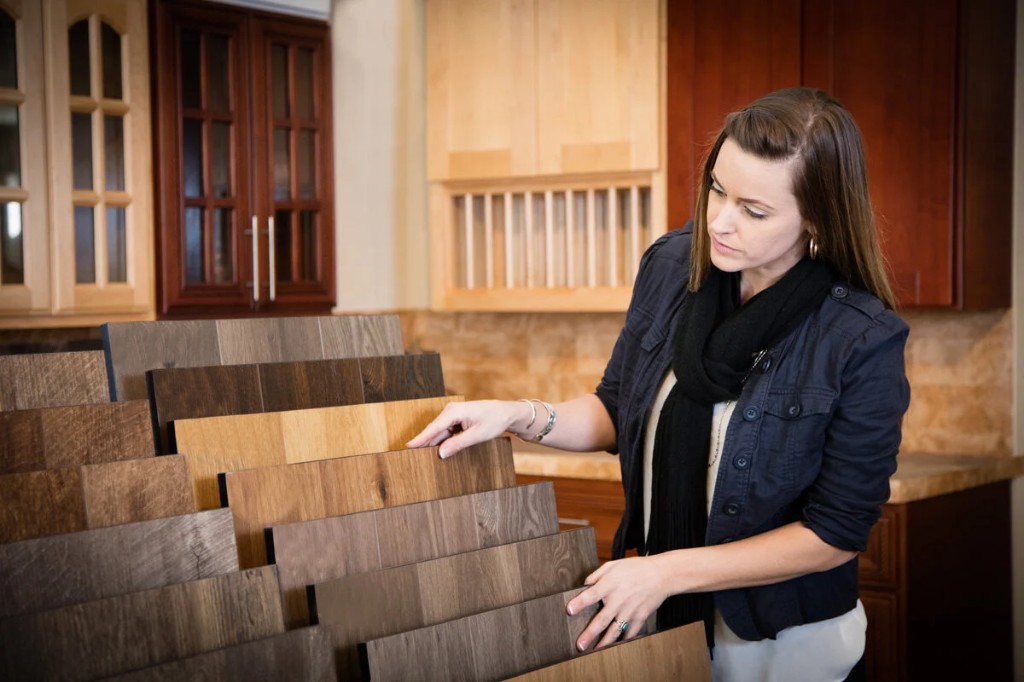
A customer stands in a showroom holding a tile or carpet sample.
They are trying to picture it across an entire open-plan
kitchen, a flight of stairs, or a hotel lobby. Most cannot — and when
they cannot, they hesitate. Hesitation becomes delay, delay becomes a
lost sale, or worse, a return.
Online, the gap is even wider. A product photograph on a white
background tells a buyer almost nothing about scale, tone in natural
light, or how a pattern will repeat across a room. Abandoned baskets
in flooring e-commerce reflect this daily. The swatch-to-room
disconnect is not a marketing problem; it is a fundamental mismatch
between how flooring is sold and how it is experienced.
What the research says
The evidence from visualisation programmes in home furnishings,
flooring and adjacent categories points in a consistent direction.
01
Conversion lift
Shoppers who engage with a room visualiser are significantly more likely to complete a purchase. Industry benchmarks suggest meaningful uplifts for flooring and home furnishings — particularly on higher-value SKUs where the perceived risk of a wrong decision is greatest.
02
Returns reduction
Returns driven by "not what I expected" fall when customers have pre-visualised a product in their own space. The visualiser aligns expectation to reality before the order is placed — reducing costly reversals for both retailer and manufacturer.
03
Higher average order value
Visualisation encourages shoppers to consider complementary products — stair carpets, borders, coordinating rugs — that they might not have noticed on a product page. Seeing a room come together in context drives discovery and increases basket size.
Residential flooring — confidence at the point of commitment
A new floor is a significant household investment. Whether it is
engineered oak in an open-plan living space, LVT in a family
bathroom, or a patterned stair carpet that runs from hallway to
landing, the buyer is committing money and disruption to a product
they may never have seen in a comparable setting.
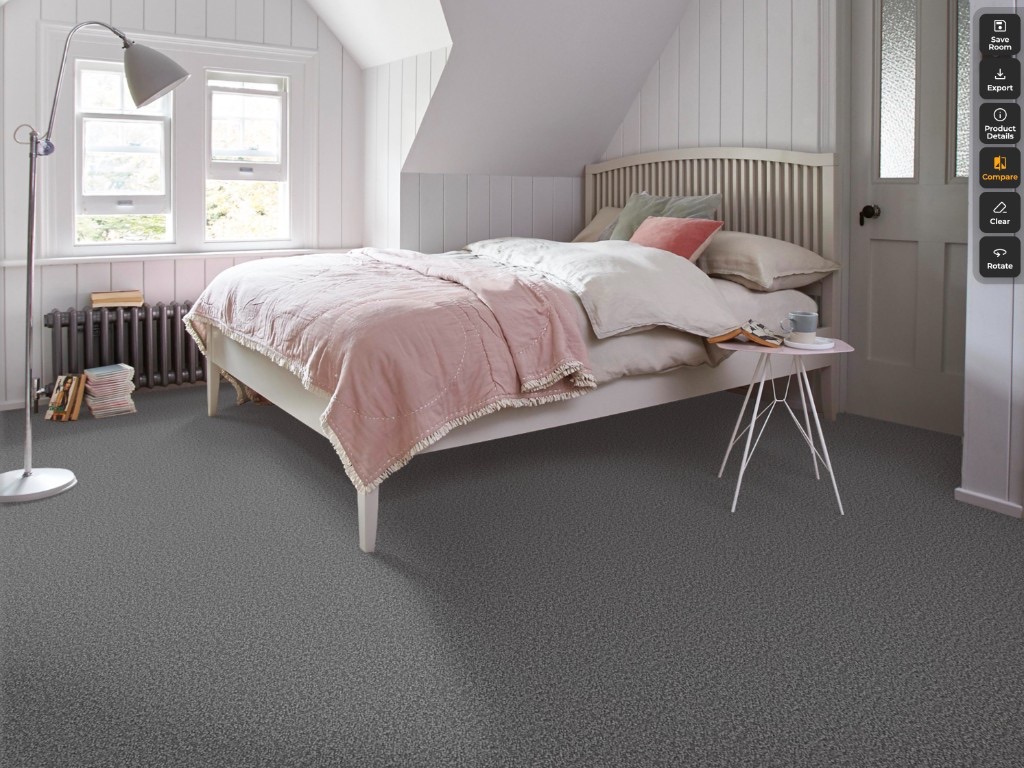
Room visualisation lets the shopper place the exact product — the
right colourway, the correct scale, the actual repeat — into a
photograph of their own home. That shift from "I think this will
work" to "I can see it working" is where purchase confidence is
built.
Cavalier Carpets — Residential
From "I think this will work" to "I can see it working" — that is
where purchase confidence is built.
Bespoke rug recolouring extends this further. If the design is right
but the palette does not quite match a scheme, our tools allow the
colourway to be adjusted and previewed before production — removing
the last barrier between a browser and a buyer.
Commercial flooring — specification with fewer surprises
In contract and commercial environments the stakes are higher still.
A flooring decision across a hotel corridor, a corporate office, or
a retail fit-out involves multiple stakeholders, tight timelines, and
significant cost if the specification needs to change after
installation.
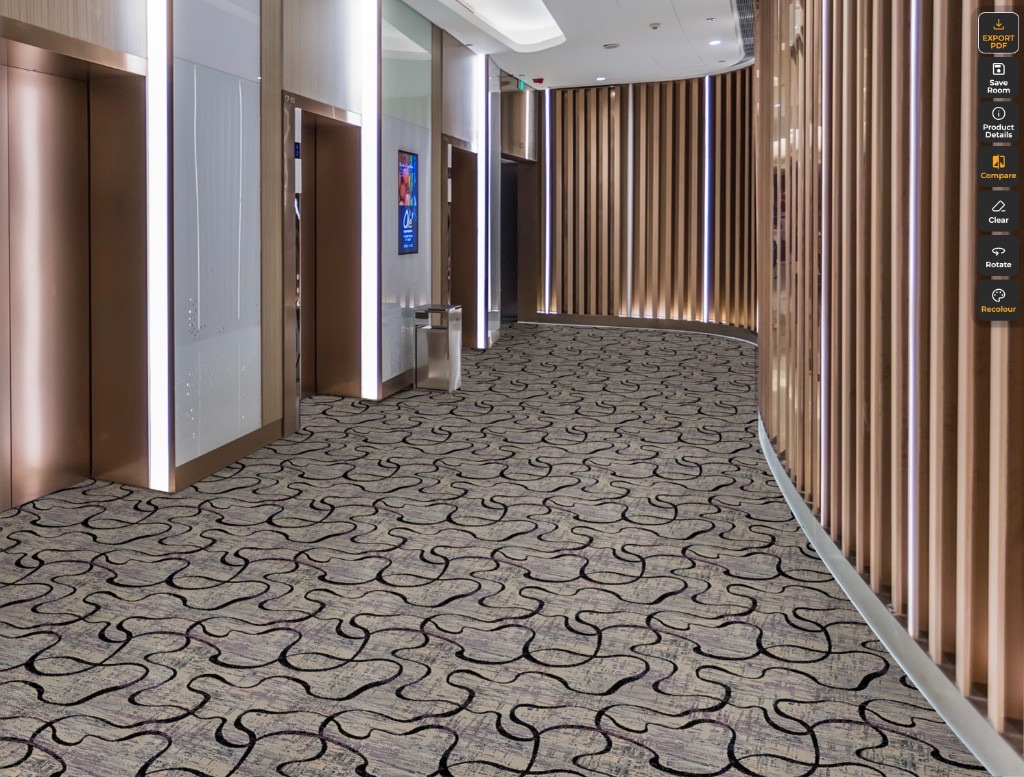
Visualisation supports the approval chain. Rather than asking a
facilities manager or interior designer to approve from a sample
board, you give them a rendered preview of the actual product in the
actual space. Revisions happen in the tool, not on site. Sign-off
becomes faster; surprises become rarer.
For commercial carpet, entrance matting and hard flooring programmes,
this capability is increasingly expected at the shortlisting stage —
not as a demonstration of technology, but as evidence that a
supplier understands how specification decisions actually get made.
Cavalier Carpets — Commercial
The competitive window
Room visualisation has shifted from a point of differentiation to a
table-stakes expectation in the more progressive segments of the
flooring market. Brands that have invested in it are winning the
comparison stage — the moment a potential customer shortlists two or
three options and makes their final decision.
For brands that have not yet deployed a visualiser, the window
remains open, but it is narrowing. The question for most procurement
teams is no longer whether to visualise, but how to
do it in a way that fits their catalogue, their website, and their
commercial team's capacity to manage it.
Why it matters who you work with
Not all visualisation programmes deliver equally — and the difference
is rarely visible in the demo. It shows up six months later, when a
new collection needs onboarding at short notice, or when a stair
scenario produces an unexpected result the night before a product
launch.
We work with clients to choose the integration approach that suits
them: a stand-alone visualiser hosted independently, or a module
embedded directly within their existing website. The
shape of the programme follows the client — not the other way around.
“At Cavalier Carpets, we have found the visualiser tool
invaluable in helping customers picture how carpets and flooring
will look in their own room settings before committing. It is
intuitive, reliable, and the team behind it is constantly
innovating, which gives us confidence the platform will keep
pace with our needs.”